If you are looking to buy a camper in Japan, here are all the steps you need to watch for.
Can you buy a camper van as a foreigner in Japan?
You can buy a vehicle in Japan if you hold a residency card (work visa, working holiday visa, spouse visa, student visa, long-term resident visa).
What documents do I need to buy a vehicle in Japan?
The documents needed are:
- Valid residency card (在留カード, Zairyū Card): shows your legal status and registered address.
- Registered address in Japan (住民票, Jūminhyō): needed for registration documents
- Parking Certificate (車庫証明, Shako Shōmeisho): proof that you have a legal parking space for the car (usually within ~2 km of your address). This is one of the biggest hurdles.
- Valid driver’s license: Japanese license is best; an International Driving Permit (IDP) is allowed only for up to 1 year.
- Car insurance: compulsory automobile liability insurance (自賠責保険, Jibaiseki Hoken) is required before registration.
- Personal seal (inkan/hanko): often used instead of a signature in Japan, and some dealers require one.
- Japanese bank account: needed to pay for the car, parking, insurance, and other fees.
NOTE: The Parking Certificate implies that you rent a parking space or own a home that has parking space.
What are the costs of owning a vehicle in Japan?
Besides maintenance and gas, owning a car in Japan comes with several costs:
- Vehicle Tax (自動車税): a yearly tax based on engine displacement. A kei car (660cc) is approximately ¥10,800/year. Standard passenger cars range from roughly ¥29,500 to ¥111,000/year depending on engine size. Purpose-built RVs and large campervans may fall into a different category — confirm with your dealership.
- Mandatory Inspection (Shaken – every 2 years): This is a visit to the mechanic that will make sure your car complies with minimum safety requirements (used tires, braking, lights, etc.). The price ranges from ¥100,000 to ¥900,000 depending on the size of the vehicle, the fuel type used, and its age.
- Compulsory automobile liability insurance (Jibaiseki): ranges from ~¥20,000–¥35,000/year.
To this you can also add optional insurance to better cover damage that you could cause or to have roadside assistance.
NOTE: Shaken is a big two‑year bill and should be taken into account when buying a used car, depending on whether it's due soon or not.
Where to buy a camper van in Japan?
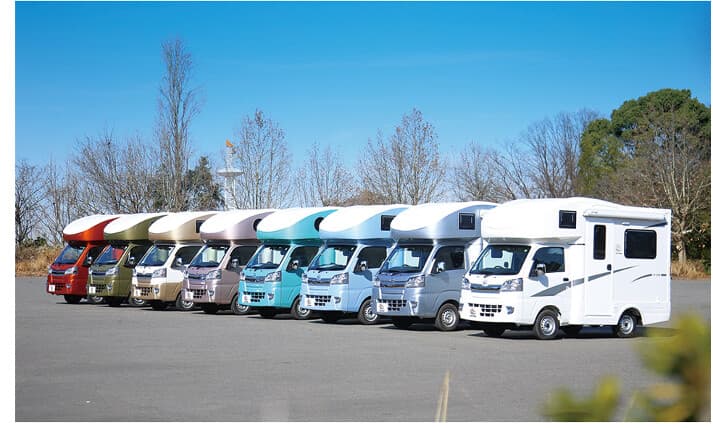
Getting your hands on your new home will require a lot of research. You'll first need to know exactly what you want (a kei car, normal car, van, RV, bus..): used or new? And how you want it: already converted or to convert it yourself.
NOTE: Compared to other countries, the preferred way to buy a used vehicle in Japan is through dealerships. There are very few transactions from person to person like in Europe or the USA.
Dealerships
Dealerships are by far the most common way to buy a used vehicle in Japan. They handle all the paperwork, inspections, and registration on your behalf — which is a significant advantage for foreigners. Look for specialist camper dealers rather than generic used-car lots; they will understand conversions, insulation, and gas systems better.
Popular dealer platforms to search for listings:
- Goo-net — one of Japan's largest used-car search portals, with English filtering options.
- Car Sensor — similarly large, good filtering by body type (キャンピングカー / camping car).
- Car View — another solid option.
- JRVA member dealers — the Japan Recreational Vehicle Association lists certified camper dealers.
Yahoo Auctions
Yahoo Auctions Japan (ヤフオク) does list campervans and conversion vans, occasionally at lower prices than dealerships. However, private auction purchases mean no dealer guarantee, limited inspection opportunity, and complex paperwork for foreigners. We recommend this route only if you are already fluent in Japanese and experienced with the process.
What to check before buying
When evaluating a used camper, inspect or ask about:
- Shaken (車検) expiry date — the remaining inspection period directly affects the purchase value. A vehicle with 2 years of shaken remaining is worth more than one due in 3 months.
- Rust — especially on the undercarriage and around the wheel arches. Japan's coastal roads and salted winter roads can cause hidden corrosion.
- Conversion quality — check the insulation, wiring, gas fittings, and roof ventilation if fitted. Amateur conversions may not meet safety standards.
- Mileage and service history — Japanese vehicles tend to be well-maintained, but always ask for the maintenance record (メンテナンスノート).
- Parking certificate — confirm you have a valid parking space before signing, as the dealer cannot finalise registration without one.
The registration process
Once you agree on a price, the dealer will typically:
- Help you prepare the Parking Certificate (you obtain this from your local police station — allow 1–2 weeks).
- Handle vehicle registration and transfer of ownership documents.
- Set up the mandatory liability insurance (Jibaiseki).
- Arrange delivery or handover at their premises.
Budget for additional fees on top of the vehicle price: registration fees, recycling fee (リサイクル料), any remaining shaken cost, and compulsory insurance.